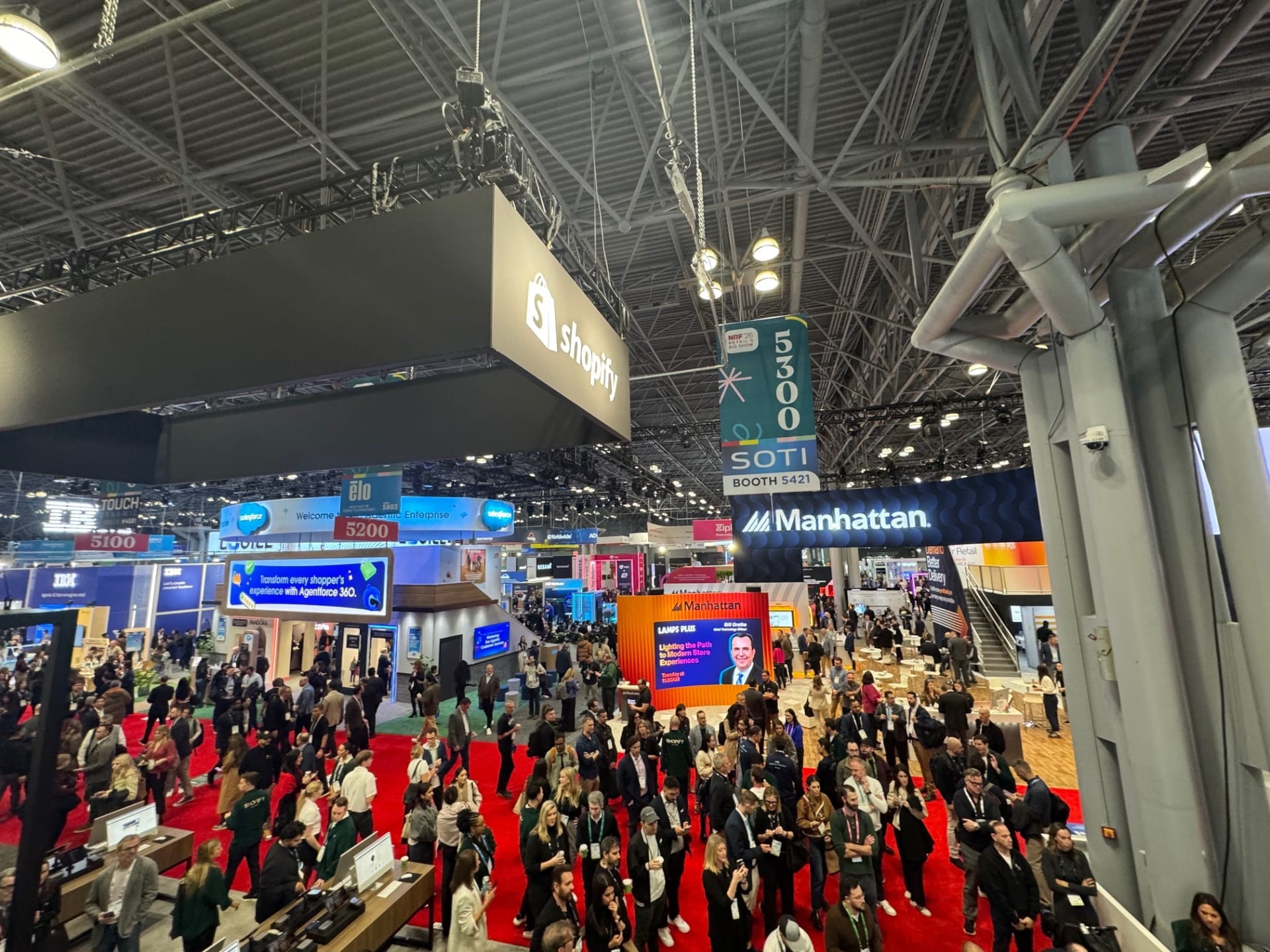
Another year, another whirlwind at the Javits Center for NRF’s Big Show. As the retail industry’s premier gathering, the 2026 National Retail Federation delivered an electrifying glimpse into a future where innovation isn't just about 'bright and shiny objects,' but about strategically enabling deeper, more meaningful human connections.

This year AI officially moved from buzzword to tangible conversations around implementation focused on preparing for the future of agentic AI – and making it work responsibly and at scale. The shift is raising a critical question for brands: how do we ensure our human-first strategies not only adapt but thrive in this evolving landscape?

For brand marketers, particularly within the competitive CPG world, NRF revealed both real challenges and major opportunities ahead. The retailers who will win in 2026 and beyond are those embracing technology not as a replacement for human interaction, but as a powerful amplifier, delivering seamless experiences that anticipate needs and build lasting trust.

Here are our key takeaways from NRF 2026, viewed through the VML lens of human-first work:

1. The Connected Store Gets a Transformative Upgrade

The physical store is far from dead; it’s experiencing a profound rebirth as a highly intelligent, dynamic hub. NRF 2026 showcased stores moving beyond simple omnichannel integration to become living, breathing data ecosystems, all aimed at delivering convenience, delight, and highly relevant engagement for the customer. For retailers and brands, this means making discovery effortless, purchase invisible, and product information readily available through dynamic new media channels, while ensuring the essential human element – helpful staff and a pleasant shopping environment – remains central. We saw:

Dynamic Retail Media & Hyper-Personalized Physical Experiences: The store is transforming into a personalized media channel. Imagine walking into a grocery store, and based on your loyalty data, past purchases, and even previous online interactions, smart digital displays (from players like Samsung) highlight relevant CPG promotions or new product arrivals tailored just for you. We saw significant innovations in retail media networks extending in-store, with solutions like Vusion's smart image automations and digital shelf-edge displays offering real-time pricing, dynamic promotions, and even nutritional information right at the point of decision. Beyond the traditional aisle, innovations from Toshiba at the gas pump showcased how contextual, hyper-local retail media can influence immediate purchases like snacks and beverages, transforming previously passive touchpoints into active selling environments. This makes product discovery effortless and ensures the right message reaches the right consumer at the right time.

Frictionless, Invisible Commerce: Innovations in computer vision and IoT are making checkout an afterthought. Beyond "just walk out" technology, we saw smart shopping carts that tally items as you add them, RFID-powered solutions outfitting smart fitting rooms and even biometric payment systems using features like face or palm scans for touchless, secure checkout, integrated seamlessly. For brands, this means a faster path from discovery to purchase, but also a greater emphasis on in-store visibility and enticing product placement within a more dynamic environment.

Empowered Associates: AI-powered tools are arming store staff with real-time product information, personalized customer insights, and even predictive analytics to anticipate shopper needs. Microsoft demoed its latest AI and agent innovations in its Dynamics 365 ERP and service solution, showcasing agents making data-driven decisions, optimizing operations in real-time, and enhancing productivity by automating routine tasks. Verizon Business touted its highly realistic AI-powered robot to engage visitors on how it could be used to guide shoppers through a store. These innovations are intended to move employees from transaction facilitators to brand ambassadors, capable of focusing on exceptional service and the human element of the in-store experience.

01. Vusion Smart Displays 02. Toshiba Convenience 03. Verizon Business Robot

2. The Changing Landscape of Search: From Query to Conversation

The era of keyword-driven search is rapidly evolving. NRF 2026 highlighted a future where search is increasingly conversational, anticipatory, and multimodal, driven by advanced AI. This shift demands marketers rethink their SEO strategies beyond traditional keywords, optimizing for intent, context, and natural language. The focus is now on being discoverable within intelligent conversations that solve human problems, rather than just being found via a direct product search. As a result, brands are racing to adopt strategies for GEO/AEO alongside their traditional SEO strategies. We saw:

  • Conversational AI as the New Gatekeeper: Consumers are no longer just typing keywords; they're engaging in natural language conversations with AI assistants, voice platforms, and generative search engines. These AI agents understand context, intent, and even mood, shaping product recommendations and purchase pathways. Walmart and Google jumped into this space together, announcing the integration of Walmart’s shopping experience directly into the Gemini app to enable customers to discover and buy Walmart and Sam’s Club products through conversational AI. When accounts are linked, Gemini can recommend complementary items based on past purchases and surface all Walmart+ and Sam’s Club member benefits.
  • Multimodal Discovery: Search isn't just text. Visual search, voice search, and even haptic feedback are converging. Imagine snapping a photo of a recipe ingredient and having your AI assistant instantly suggest where to buy it, or identifying a product you see on a social media feed and adding it directly to your grocery list.
  • Proactive Personalization: Search is becoming less about you initiating a query and more about AI proactively surfacing relevant solutions based on your past behavior, predicted needs, and external context (e.g., weather, time of day.)

This NRF, we saw significant moves by platforms like Shopify, which alongside Google, unveiled a new Universal Commerce Protocol (UCP) for retailers. UCP is the new connection and communication protocol for retail and commerce, just like the Phoenicians were, they created a common language to enable commerce. It can connect the human aspect with the AI aspect.  Co-developed with industry leaders including others like Etsy, Wayfair, Target and Walmart, UCP is a strategic move to standardize how AI agents can discover, evaluate, and purchase products on behalf of consumers. It's about enabling a future where AI isn't just recommending products, but buying them.  

3. The Era of Anticipatory Commerce is Coming

Perhaps the most significant impact of the ‘Agentic Era’ that we’re seeing from NRF 2026 was a decisive shift from intentional, funnel-based shopping to anticipatory commerce, where discovery is increasingly shaped by culture, context, and AI systems acting on consumers’ behalf. As agents move from answering questions to making recommendations and decisions, the unit of commerce is no longer the product or the category, but the moment—an intersection of need, inspiration, availability, and trust. While the full realization of consumers readily relinquishing complete control to these agents remains a journey, not an overnight switch, NRF 2026 undeniably showcased that the foundational technologies are being set. This means that while consumer adoption will evolve over time, the imperative for brands and retailers to prepare now – by adopting necessary systems, cleaning data, and optimizing for agent interactions – is immediate. Anticipatory commerce aims to be the pinnacle of convenience, freeing up valuable human time and reducing cognitive load. For brands, it demands a focus on service, reliability, and ultimately, trust -- brands that win will have credibility for their category and create value for their consumers, not just their bottom line. 

Your Personal Shopping Assistant, Powered by AI: Imagine an AI agent monitoring your pantry, ordering your preferred CPG staples before you run out, finding the best deals across retailers, or even suggesting new products based on your dietary preferences, lifestyle, and consumption patterns. These agents are evolving beyond simple recommendations to full-fledged decision-makers and purchasers.

Invisible Transactions, Seamless Lives: The goal of anticipatory commerce is ultimate convenience. Subscriptions are optimized, shopping lists are automatically generated and fulfilled, and even discovery of new brands happens through an agent that deeply understands your preferences. Winning brands will thread the needle to balance convenience with control – allowing consumers a sense of choice and final say without creating another burden to manage.

The Brand's New Role: Serving the Agent: For brands, this means a critical shift. Your target is no longer just the human consumer; it's also the AI agent serving them. This requires deep integration, transparent data, compelling product information, and a value proposition that resonates with both human and artificial intelligence.

4. The Algorithmic Backbone: Harmonizing CX and Operations

While often seen as distinct functions, NRF 2026 made it abundantly clear that exceptional customer experience (CX) is now inextricably linked to – and powered by – seamless operational excellence. The "Algorithmic Backbone" refers to the intelligent systems and data flow that connect every touchpoint, from initial discovery to final delivery and beyond. This convergence ensures that the brand experience is not just about marketing messaging, but about reliable, consistent, and frictionless execution at every step. For retailers and brands, it’s about building trust through transparency, consistency, and the silent reassurance that your products will be there when promised, in perfect condition, delivering on the experience your brand promises, powered by an intelligent, integrated foundation.

Real-time Data, Real-time Experience: The ability to collect, analyze, and act on data across the entire customer journey and supply chain is paramount. This means using AI for predictive inventory management, optimizing last-mile delivery routes, personalizing return processes, and even proactively addressing potential customer service issues before they arise. This NRF, we saw players like Adobe and Microsoft announcing renewed partnerships focused on advancing marketer AI. These collaborations are designed to unify customer data, empower marketers with generative AI tools for personalized content at scale, and orchestrate complex customer journeys more intelligently. Similarly, platforms like Salesforce continue to evolve their Commerce, Marketing, and Service Clouds, offering brands the tools to create unified customer profiles and deliver AI-driven personalization that spans sales, service, and marketing touchpoints – all built on a robust operational foundation.

From Promise to Delivery: The seamlessness promised by anticipatory commerce and connected stores falls apart without robust operations. A personalized recommendation means nothing if the product is out-of-stock or delivery is delayed. Integrated platforms ensure that the front-end brand promise is consistently met by the back-end operational reality. Google Cloud unveiled Gemini Enterprise for Customer Experience (CX), an agentic solution that brings shopping and customer service together into a single intelligent interface. Retailers like Kroger, Lowe’s, Papa Johns, and Woolworths shared plans to adopt it.

Supply Chain Visibility as a CX Differentiator: Consumers expect transparency. Brands that can provide clear, real-time information about product sourcing, manufacturing, and delivery will build trust. AI-driven supply chain optimization isn't just about cost savings; it's a critical component of customer satisfaction and loyalty.
01. Adobe Experience Cloud 02. Microsoft Cloud for Retail 03. Samsung AI Store Assistants

Please provide your contact information to continue.

Before submitting your information, please read our Privacy Policy as it contains detailed information on the processing of your personal data and how we use it.

Related Content

TC 26 COVER BACKGROUND
Insight

Tomorrow’s Commerce 2026: Human + Tech Counterpoint

Mapping the near, next and far future of retail and shopper behavior across AI-driven efficiency, authentic experience and human connection
Read Article
FSR 2025 Cover Hero Image LP
Insight

The Future Shopper 2025: Key trends shaping e-commerce

The definitive report on e-commerce trends, consumer behavior shifts, AI-driven shopping, omnichannel, marketplaces, personalization, and sustainability.
Read Article